
New in Town: Rebuilding Your Household's Contact Network After a Move
Moving resets your family's entire directory at once. A phased plan for rebuilding doctors, schools, vendors, and neighbors in a new town.
Nobody warns you about this part of moving. The boxes get unpacked in two weeks. The contact network takes two years. Every number your household ran on (the pediatrician, the school, the plumber, the sitter, the neighbor with the key) belonged to the old place, and the new town starts you at zero. That first winter when the furnace makes a noise and you realize you don't know a single repair person in the entire state is a distinct and humbling moment of modern family life.
The rebuild can't be skipped, but it can be sequenced, which turns two chaotic years into a manageable project. Here's the phased plan.
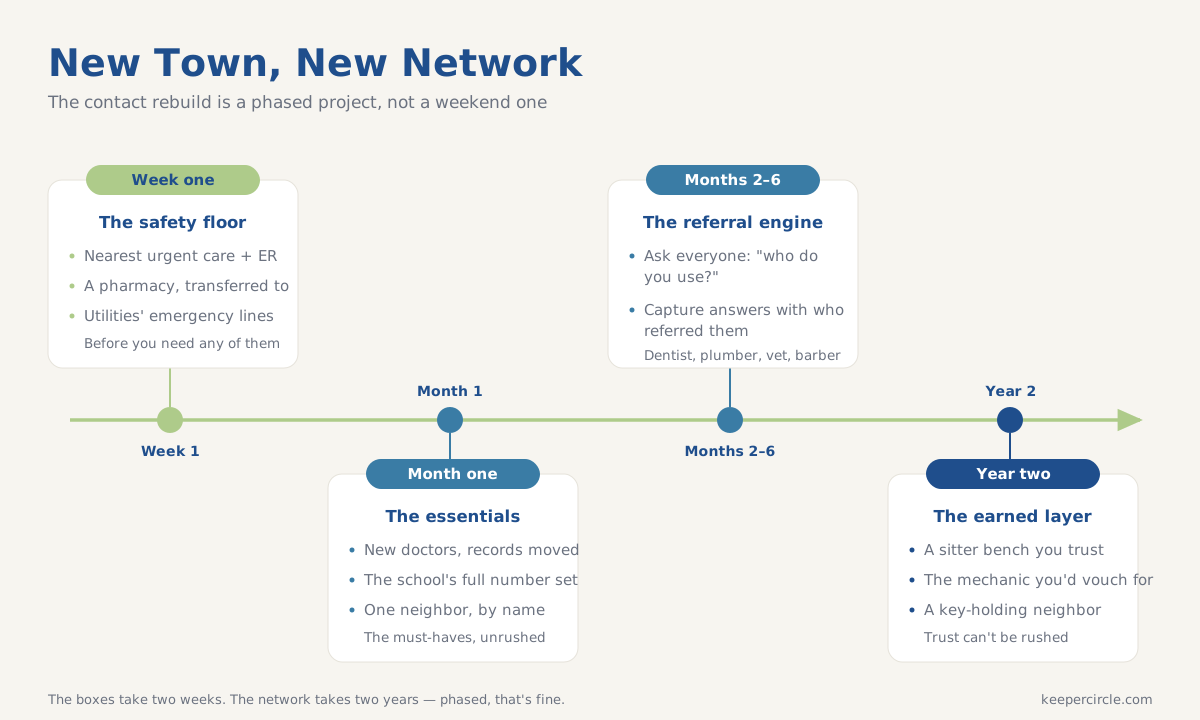
Week one: the safety floor
Before art goes on walls, establish the minimum viable emergency layer. Locate and save the nearest urgent care and ER, a pharmacy, your utility companies with their outage and emergency lines, and, if you rent or have an HOA, the management contact. Add your new address, written out, to your own emergency materials, because in a genuinely new place even the adults blank on the address under stress. And update the people who need your new reality, meaning your emergency contacts and family, who should know the new address and the new nearest-hospital picture.
Advertisement
Ads support the free tier. Paid households are ad-free.
Month one: the essentials layer
- Medical transfers. A new pediatrician and adult doctors, chosen with whatever referral you can get (your old doctor often has suggestions, and insurance directories narrow the field). Request records transfers early, since they're slower than anything else in this list.
- School enrollment's contact flood. A new school delivers its whole contact set at once, so run the full capture. Office, attendance line, nurse, teachers, transportation, aftercare.
- One neighbor. Just one, to start. Introduce yourself, trade numbers, and you've planted the seed of the eventually-key-holding relationship.
- The recurring services. Trash day rules, internet installer, and whatever the region requires that your old region didn't, like the snow guy or the pool service.
Months two through six: the referral engine
This is the phase where the network compounds, and it runs on one behavior. Asking. Every vendor need becomes a referral question to the people you're newly meeting ("we're new here, who do you use for HVAC?"), and every answer is double value, a vetted vendor plus a small social bond, since people enjoy being asked. School and activity parents become the second engine, supplying the sitter recommendations, the dentist opinions, and the which-mechanic wisdom that no directory holds. Capture referrals when they happen, noted with who recommended them, even for needs you don't have yet. The fence guy recommended in March is the fence solved in September.
The capture discipline that makes it stick
A move is uniquely dangerous for contact information because everything arrives at once, in fragments, across two adults. The utility number came in the mail one parent opened. The pediatrician referral landed in the other's texts. Six months in, the new network exists but is split across two phones in exactly the pattern that made the old town's information fragile.
The fix is to rebuild into shared infrastructure from day one. A household contact list that both adults feed and both adults can search means the new town's network belongs to the household as it forms, with the context attached ("Dr. Okafor, pediatrician, referred by Lena next door, first visit went great"). This is the single best moment in a household's life to adopt a tool like KeeperCircle, because there's no backlog to migrate. The network is being born, and it can be born organized. As for the old town, archive that cluster rather than deleting it. Records questions, warranty follow-ups, and the friendships worth keeping all live there.
The two-year honesty
Some of the network only time can build. The sitter bench takes trial and error. The great mechanic reveals himself slowly. The neighbor becomes the key-holding neighbor after a year of waves and one favor. That's fine, and it's worth naming so the slow parts don't feel like failure. Run the phases, ask for referrals relentlessly, capture into shared ground, and somewhere around the second autumn you'll notice the quiet milestone every relocated family eventually hits. Something breaks, and you know exactly who to call.