What Kids Should Know by Age: Addresses, Phone Numbers, and When to Call 911
An age-by-age guide to the safety information kids can learn, from knowing their full name to memorizing a phone number and calling 911.
There's a version of family safety that lives in gear, cards, and apps, and there's a version that lives in your kid's head. The second one is the only one that's always with them. A child who knows their full name, a parent's real name, an address, and one phone number can be helped by any adult on earth, no technology required.
Kids can learn this information much earlier than most parents start teaching it. The ages below are rough targets, not milestones to stress over, since kids vary and repetition matters more than timing. Think of it as a curriculum you teach in the car, two minutes at a time.
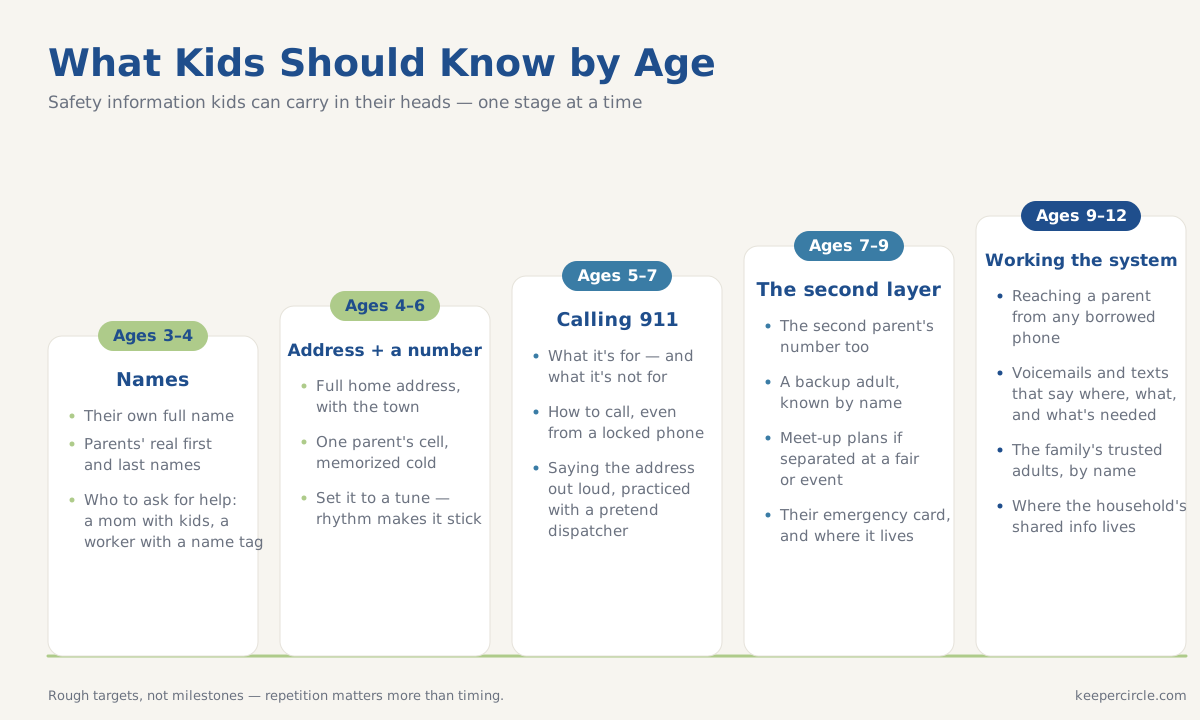
Ages 3 to 4: Names
The foundation is identity. Their own first and last name, said clearly to a stranger, and their parents' actual first and last names, because "my mom is Mommy" is a dead end for a helper. Practice playfully ("what's Mommy's real name?") until it's automatic. This is also the age to start the "who to ask for help" lesson. If you're lost, find a mom with kids or a worker with a name tag.
Advertisement
Ads support the free tier. Paid households are ad-free.
Ages 4 to 6: Address and one phone number
A full street address, with town, is learnable by most kindergartners, especially set to a tune. Rhythm and melody are cheat codes for memorization, which is why you still know your childhood phone number. Then one parent's cell number, digit by digit, the same way. One number cold beats two numbers shakily. Quiz in the car, at bath time, and in line at the store, always as a game.
Ages 5 to 7: 911, the full lesson
Kids this age can learn all four parts. What 911 is for (someone is badly hurt, there's a fire, or a grown-up won't wake up). What it is not for (a lost toy, a sibling being unfair, practice). How to physically do it, including from a locked phone, since every phone can place an emergency call from the lock screen, and it's worth showing them on yours. And what happens next: a helper will answer, ask questions, and you stay on the line and answer them. Rehearse the script out loud with you playing dispatcher. "What is your emergency? Where are you?" A child who has said their address to a pretend dispatcher ten times will manage it once for a real one.
Teach the balance without fear. You will never be in trouble for calling 911 when you're truly scared, and it's not a toy. Kids handle both ideas fine when they're delivered calmly.
Ages 7 to 9: The second layer
Now add depth. The second parent's number, a backup adult's name ("if you can't reach us, Aunt Dana is the next call"), and situational plans, like the meeting spot if you're separated at a fair and what to do if no one is home at the bus stop. This is also the age where a wallet or backpack emergency card becomes something they can use themselves rather than just carry.
Ages 9 to 12: From memorizing to operating
Older kids graduate from knowing information to using systems. How to reach a parent from someone else's phone, which requires the memorized number, since borrowed phones don't have your contacts. How to leave a voicemail and text that actually helps ("where you are, what's wrong, what you need"). Who the family's trusted adults are, and for phone-carrying kids, where the family's shared information lives.
The practice pattern that works
Whatever the age, three habits make it stick. Practice tiny and often, since two minutes weekly beats a single safety lecture. Frame it as competence rather than danger, because "you're big enough to know this" lands better than "in case something terrible happens." And re-test after changes. A move or a new number silently invalidates the old answers, and kids will confidently recite the wrong address for months if nobody re-asks.
The other half of the equation
Everything above puts information in your child's head. The mirror-image job is keeping the household's information available to every adult who might get the call. When your kid does ring from a borrowed phone, the parent who answers needs the sitter's number, the pediatrician, or the neighbor with the key, right then. That's what a shared household contact list like KeeperCircle is for, so that either parent, not just the family's usual keeper of numbers, can act on the call. Your kid's memorized number gets the message home. The household's shared list handles what happens next.