The Family Emergency Contact List: What to Include (Free Printable Checklist)
Everything a complete family emergency contact list should include, where to post it, and how to keep it current, with a printable checklist.
An emergency contact list has one job. It has to work when the person who knows everything isn't available. Not when you're calm and your phone is charged, but when the sitter is home with the kids and can't reach you, or when you're at the ER filling out forms with one hand.
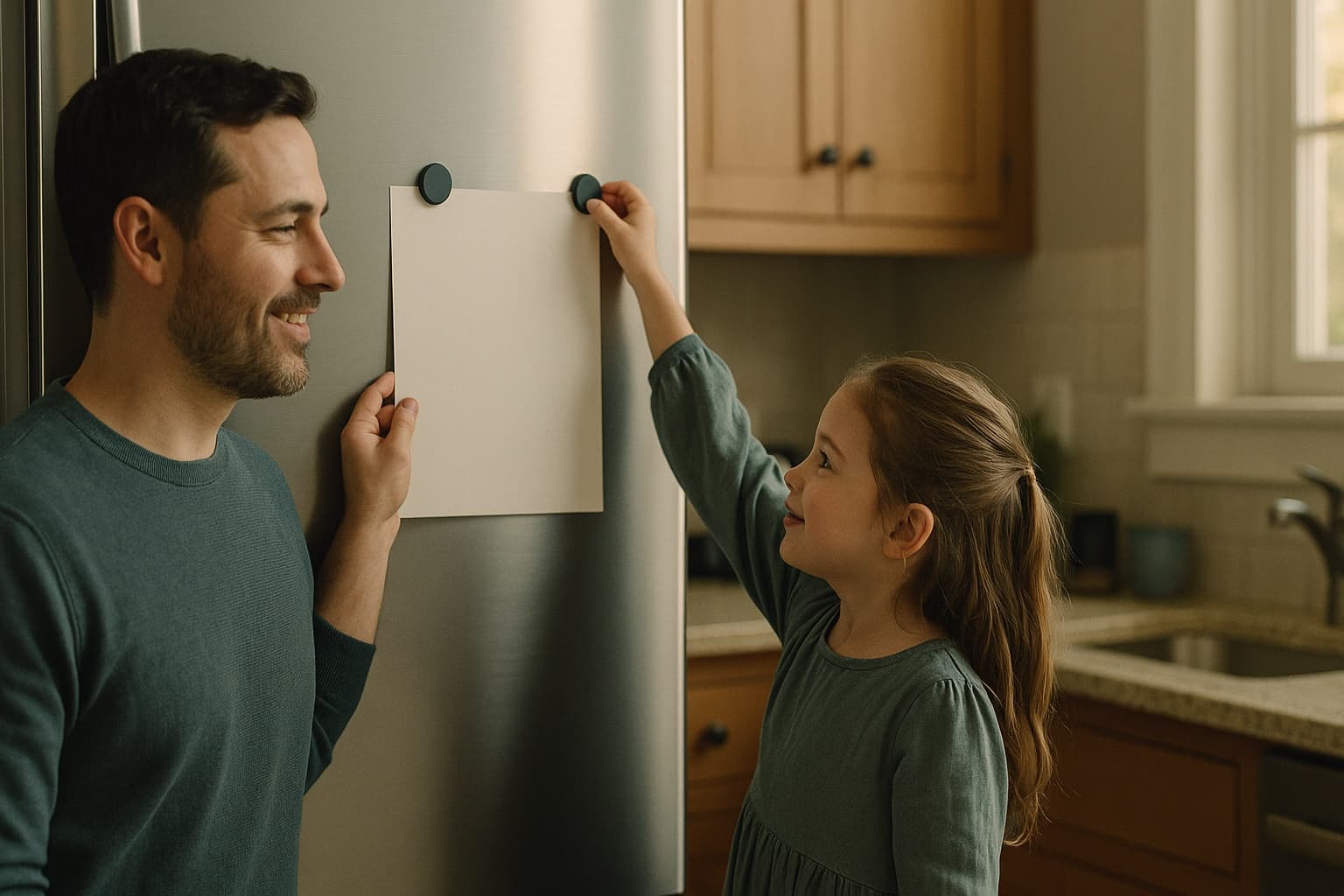
Which is why the list on most refrigerators fails. It was made once, years ago, from memory, by one person. So it lists the old pediatrician, no backup adult, and nothing about the dog. Here's what a complete list actually includes, and how to make one this week.
Advertisement
Ads support the free tier. Paid households are ad-free.
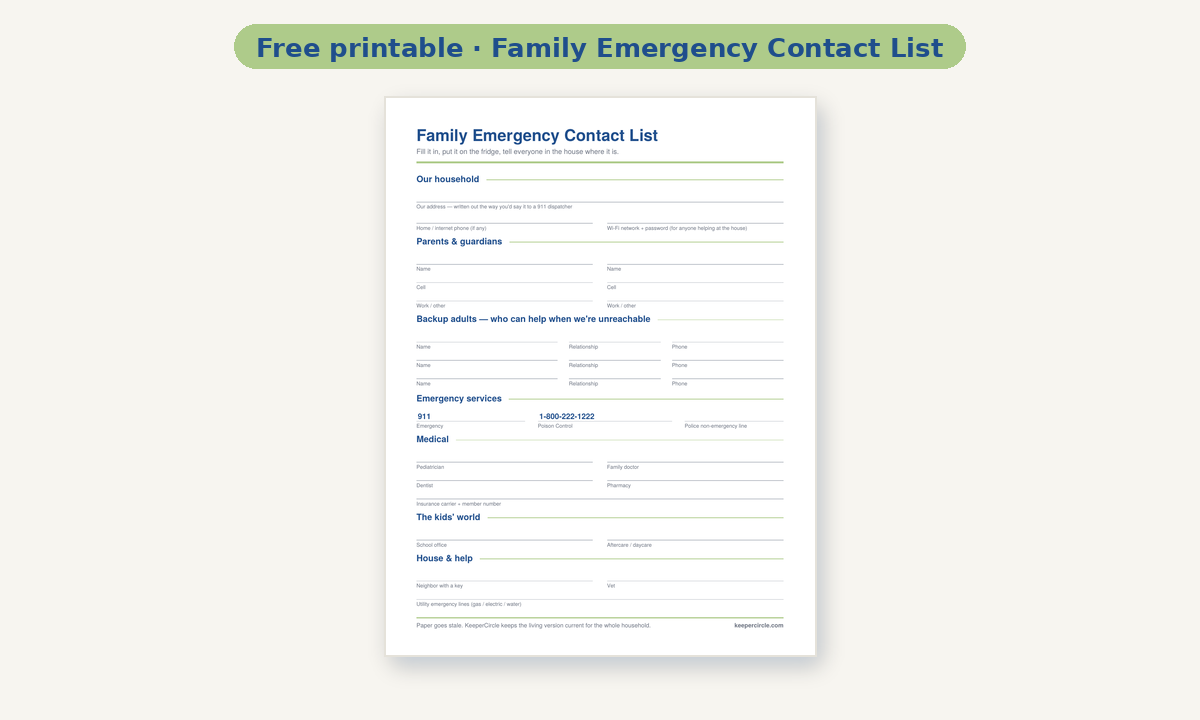
Download the free printable checklist (PDF) — a one-page fill-in version of everything below, ready for the fridge.
The complete list, section by section
1. Household adults. Every adult in the home, with cell, work number, and workplace name. In a real emergency, a caregiver may need to call your office's front desk when your cell goes to voicemail.
2. Backup adults. Two to three people who can act when you can't, whether that's picking up kids, making a decision, or coming over. Local beats beloved. The aunt ten minutes away outranks the godparent two states over. Note each one's relationship to the family and whether they're on the school's authorized-pickup list.
3. Medical. Pediatrician, each adult's doctor, dentist, the pharmacy you actually use, your preferred urgent care and nearest ER, and Poison Control (1-800-222-1222 in the U.S., worth writing on every copy).
4. Per-child information. For each child, list date of birth, allergies and reactions, medications with doses, and any conditions a caregiver or EMT should know. This is the section people are most reluctant to write down and the one ER staff most wish they had. Keep it current, and keep the list itself somewhere appropriate, visible enough to help but not posted where every visitor reads it.
5. Home and neighbors. The neighbor with your key, one more neighbor who's usually home, and your address written out. Guests and young kids calling 911 need to read it rather than know it.
6. Utilities and home emergencies. The gas leak line, the power outage line, the water company, and your go-to plumber and electrician. Sunday-night failures don't wait for you to Google.
7. Pets. Vet, emergency vet, and feeding or medication basics. This is the part of the plan everyone forgets until the family is unexpectedly away overnight.
Where the list should live
Three placements cover nearly every scenario. Post one at home where a caregiver will look (the fridge, or inside a kitchen cabinet door, which keeps child details away from casual visitors), keep one in each car or go-bag, and make sure every household adult can reach a digital copy from their phone. The digital copy matters more than people think. Paper is what you hand a sitter, but the version you update is the one that keeps them all honest.
The failure mode is staleness
Emergency lists don't fail because they're incomplete on day one. They fail because nobody updates them. The pediatrician changes, a medication dose changes, the backup adult moves away, and the list becomes fiction. Two habits prevent that. Put a review on the calendar twice a year (back-to-school and New Year's both work), and keep the master copy somewhere easy to update and reprint, so revising the list doesn't mean recreating it. This is exactly the job a shared household contact manager is built for. In KeeperCircle, emergency contacts are marked once, stay current as your household updates them, and paid households can print a fresh emergency sheet whenever anything changes. However you keep yours, the principle stands. One living master copy, printed as needed, beats five aging printouts that all disagree.
Make it this week: a 20-minute plan
- Walk the seven sections above and write down what you know. Gaps are fine. Note them.
- Fill the gaps with three texts, one to the neighbor about the key, one to the backup adults about being listed, and one to the school about who's on the pickup list.
- Print two copies and post them (home and car). Save the master where both adults can reach and edit it.
- Tell the people on the list they're on it. An emergency plan your backup adult doesn't know about is a surprise, not a plan.
- Calendar the six-month review. Ten minutes, twice a year, and the list stays true.
The best time to build the emergency list is the week nothing is wrong, which, if you're reading a blog post about contact lists, is probably this week. It takes twenty minutes.