Who Should Be on Your Emergency Contact List? More People Than You Think
Beyond 911 and grandma: the backup adults, neighbors, and specialty numbers a real family emergency plan needs, and how to choose them.
Ask most parents who their emergency contacts are and you'll get the same two answers, 911 and a grandparent. Both are correct, and neither is close to enough. Real emergencies are rarely the movie kind. They're the Tuesday kind. You're stuck in traffic and pickup is in nine minutes. The basement is filling with water. The school can't reach you and moves to the next name on the card, and there isn't one.
A good emergency contact list is really a map of who can act for your household when you can't. Here's how to build that map, role by role.
The roles, not just the names
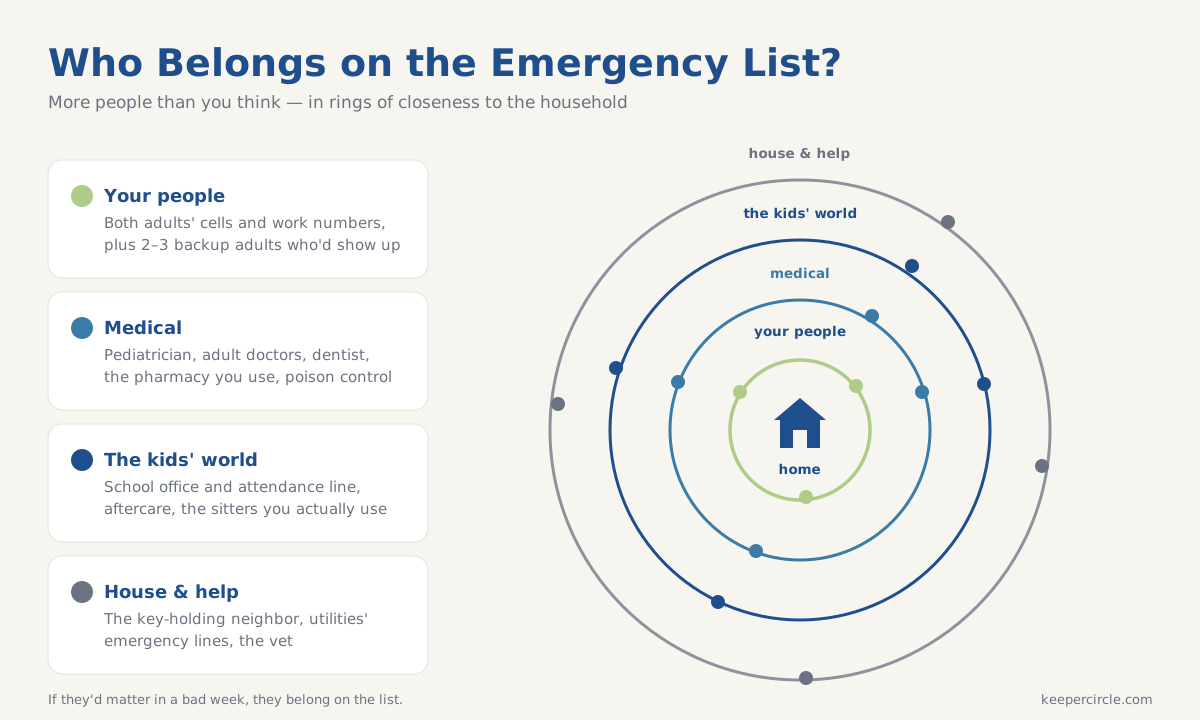
The nine-minute people. Who can physically get to your kids, your house, or your dog fast? This is about proximity rather than intimacy. Think of the neighbor two doors down, the parent friend whose kid is in the same class, or the retired couple across the street. Most families discover they have fewer nine-minute people than they assumed, which is worth knowing before the nine minutes start.
Advertisement
Ads support the free tier. Paid households are ad-free.
The decision people. If you were unreachable for hours, who could make a judgment call, like authorizing a pickup or deciding the kids eat dinner at their place? A decision person also needs to know your family's basics. Someone who doesn't know your pediatrician's name can relay a call, but they can't make one.
The authorized people. Schools and daycares release children only to adults on the authorized list. Your emergency contacts and the school's pickup list must match, because the aunt you'd call first does no good stuck in the parking lot. Check the school's card once a year. It's the most commonly stale document in family life.
The key people. Someone outside your household should hold a key (or the door code). Lockouts, alarms going off while you're away, a pet emergency, a wellness check. The key-holding neighbor covers a startling range of bad days.
The specialty numbers. These aren't people, but they belong on the list because you won't want to search for them under stress. Write down Poison Control (1-800-222-1222 in the U.S.), the gas emergency line, the power outage line, the emergency vet, and the after-hours line for your pediatric practice.
Choosing well: three tests
For each candidate, run three tests. Can they answer? A surgeon on shift or a friend who never picks up unknown numbers may love you dearly and still be the wrong slot. Can they get there? Measure distance in minutes rather than affection. Do they know they're on it? This is the step everyone skips. Being an emergency contact is a small job (accepting a call, maybe doing a pickup), but it is a job, and people do it far better when they've said yes to it. Tell them what they might be called for, make sure they'd recognize the school's number, and confirm they're on the pickup list if child pickup is part of their role.
The list is only half of it
Now the uncomfortable question. Where does this list live? If the answer is "in my head" or "in my phone," your household has a single point of failure, and it's you. Every adult in the household should be able to pull up the full list, current numbers and all, without asking anyone. That's the real argument for keeping emergency contacts in a shared household system rather than one person's phone. In KeeperCircle, any household member can mark contacts as emergency contacts, everyone sees the same current set, and the list survives the exact scenario it exists for, which is the day the usual keeper of information is the one who's unreachable.
A fifteen-minute upgrade
Tonight, name your nine-minute people, your decision people, and your key person. Text each one something like "hey, can I list you as an emergency contact for the kids?" and while you're at it, offer to be theirs. Emergency contact networks are reciprocal, and the neighbor who holds your key probably needs someone to hold theirs. Fifteen minutes of texting, and your household's worst Tuesday just got a lot more survivable.