Archive or Delete? What to Do With Contacts You Can't Let Go Of
A simple framework for the contacts you can't quite delete: what to archive, what to let go, and how to stop maybe-someday entries from piling up.
Every contact cleanup eventually stalls on the same entry. The sitter who moved away but might move back. The contractor you'd maybe use again. The old neighbor you'd want to reach if you ever visited. You can't quite keep them, and you can't quite delete them, so you close the app and the whole project dies on a maybe.
The problem isn't indecision. It's that your phone only offers two doors, keep forever or delete forever, and these contacts belong behind a third one. They need an archive.
What archiving means, and why it works
An archived contact is out of your active list but not out of existence. It doesn't appear when you scroll or search your everyday contacts, but it's retrievable in seconds if the maybe ever becomes a yes. Archiving works because it matches how these relationships actually behave. Dormant, not dead. Once the third door exists, the stalled decisions become easy, and cleanup sessions actually finish.
The decision framework
For each contact you hesitate on, ask two questions. First, is there a plausible, specific scenario where you'd contact them again? "The kids might end up on the same team next year" is specific. "You never know" is not, and "you never know" describes every human on earth. Second, if that scenario happened, would you need this stored entry, or could you easily get the number again through a mutual contact, an organization, or a quick search?
Advertisement
Ads support the free tier. Paid households are ad-free.
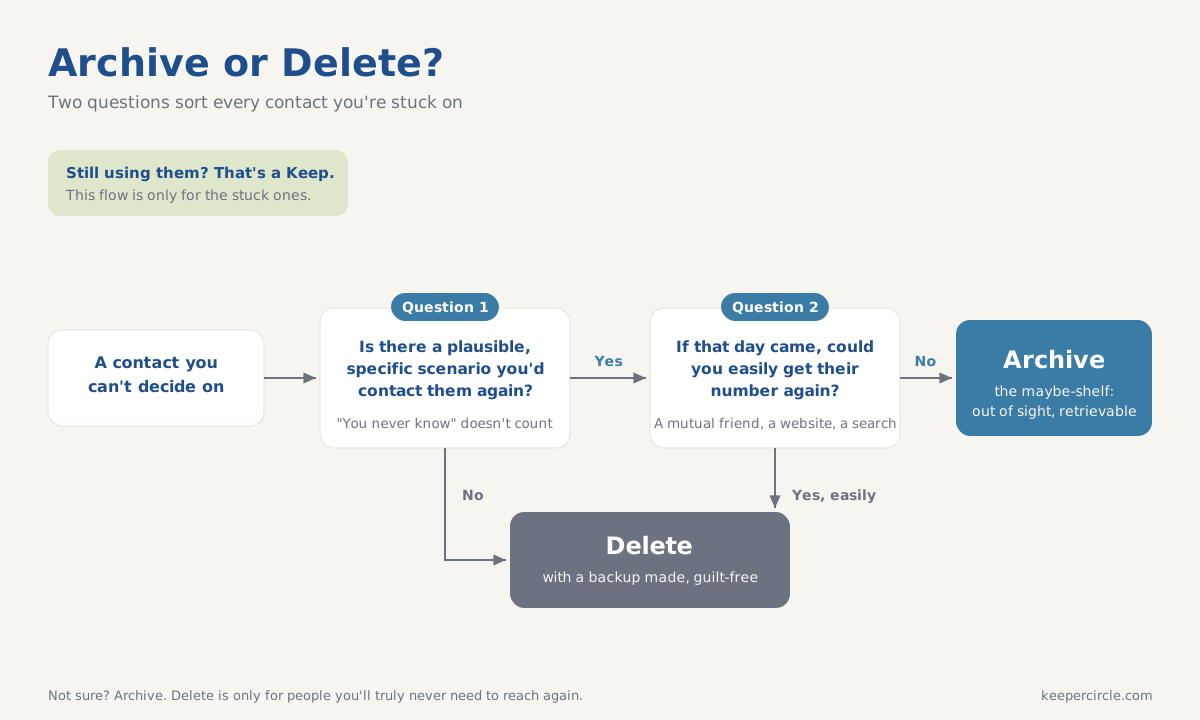
The answers sort everything. Plausible scenario and hard to re-find: archive. Plausible scenario but trivially re-findable (a business with a website, a person your best friend can reach): delete without guilt. No plausible scenario: delete, and this covers the mystery names, the expired transactions, and the events that ended.
What typically earns the archive
A few categories come up over and over. Seasonal people, like coaches and teammates' parents between seasons. Former sitters and caregivers who might return on college breaks. Good vendors you don't currently need but vetted the hard way. Families who moved away but stay in holiday-card range. Medical specialists you saw once and might be referred back to. What these share is real, earned value plus an unpredictable return date, which is exactly the profile an archive exists for.
What deserves actual deletion
Deletion is for contacts whose context has expired. If you can't identify someone after fifteen seconds of honest effort, the relationship is already gone and the entry is just data residue. Same for one-time transactions, numbers tied to a job you left years ago, and duplicate fragments left over from merges. Deleting these isn't losing anything. It's acknowledging a loss that already happened, quietly, a long time ago.
A backup export before any big deletion session removes the remaining fear. With a .vcf file saved somewhere safe, even a wrong delete is recoverable.
Faking an archive on your phone
Phones don't offer a true archive, but you can approximate one. The common workaround is a separate label or group named Archive (easy in Google Contacts) or a secondary account that holds dormant entries and stays hidden from your main view. These work, with the usual caveats. The archive is still yours alone rather than your household's, and entries carry no context about why they were kept, which means future-you inherits the same mystery-name problem on a delay.
The real version
Lifecycle is one of the reasons household contacts deserve a real home instead of an address book. In KeeperCircle, archiving is a first-class action. A household contact can be archived when its season ends and restored when the season returns, deletion comes with a 30-day restore window for mistakes, and the notes explaining who someone was travel with the entry into the archive. The retire step stops being the place where cleanups stall and becomes a normal part of how the household's list stays trustworthy.
The maybe-shelf habit
Going forward, treat the archive as your maybe-shelf and use it in the moment. When a season ends, archive the cluster. When a sitter graduates, archive with a note. Twice a year, glance through the archive and delete what has quietly crossed from dormant to done. A contact list works when the active list holds only what's alive, and the maybes have somewhere respectable to wait.