The 500-Contact Problem: How Your Address Book Got Out of Control
Your phone has hundreds of contacts and you can name maybe half. How address books became junk drawers, and the household-first way out.
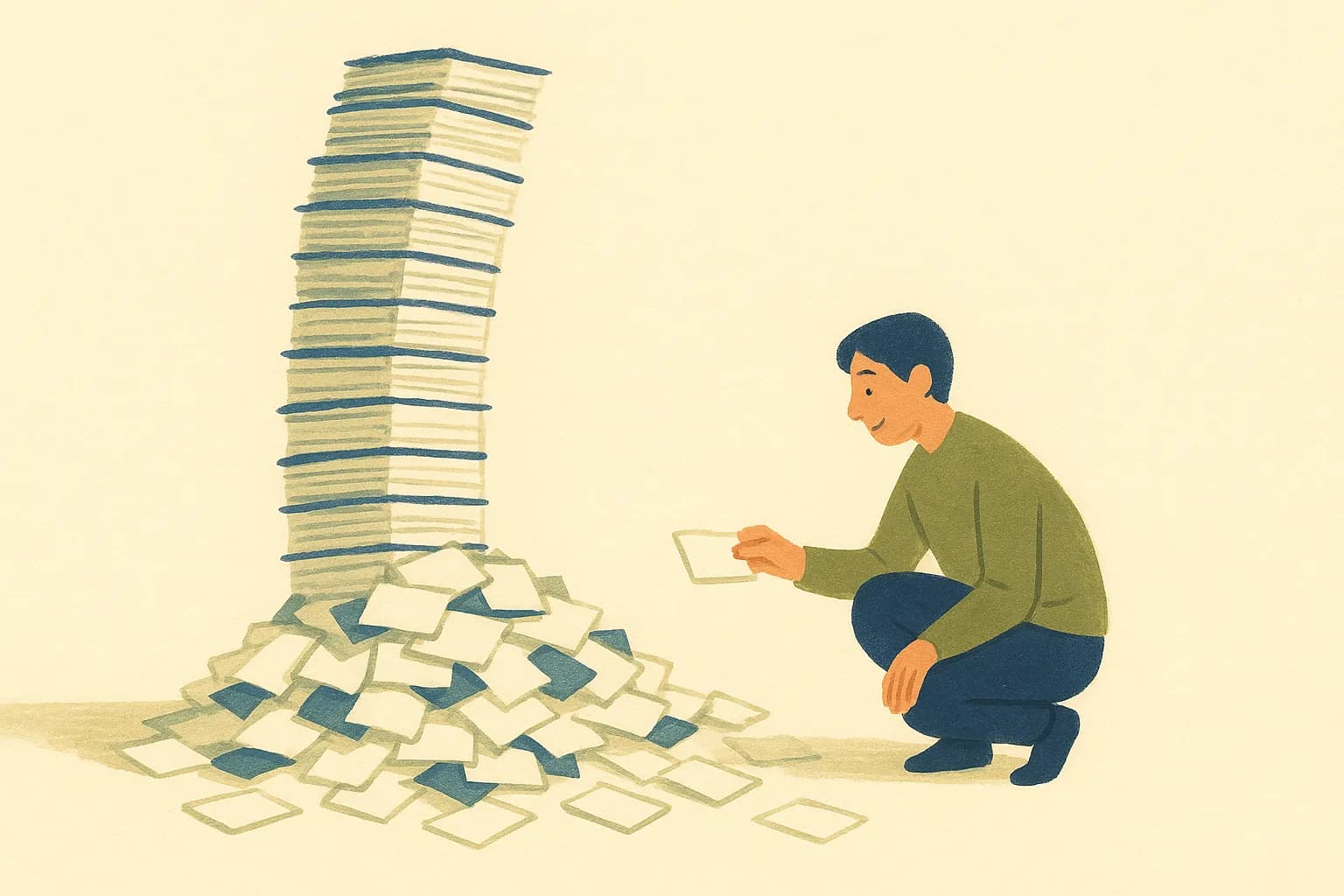
Open your phone's contacts right now and scroll. Keep scrolling. Somewhere between 400 and 800 entries, most people's thumbs get tired before the alphabet does. Now try a different exercise. Scroll and count how many of these people you could actually place. Not "sounds vaguely familiar." Actually place, as in you know who they are, why they're in there, and whether the number still works.
For most adults, the honest hit rate is somewhere around half. The rest is a fog of first names without last names, companies you stopped using, numbers with no name at all, and people labeled things like "Mike Plumber?" with a question mark doing an enormous amount of work.
How it got this way
Nobody set out to build a junk drawer. The address book got this way because it's the only database most people have been continuously adding to since roughly the invention of the smartphone, with no deletion habit attached. Every era of your life deposited a stratum. The college roommates and their long-defunct numbers. Every job's coworkers, clients, and that one IT guy. The contractor bids from two houses ago. The parents from a playgroup your teenager attended as a toddler.
Advertisement
Ads support the free tier. Paid households are ad-free.
Add the automated layers, meaning the sync systems that helpfully imported every person you ever emailed, the duplicates created every time you switched phones, and the entries that arrived via "let me text you my info" and were saved mid-conversation with whatever name fit in four seconds.
The result is an archive of your entire social history pretending to be a tool for reaching people today.
Why it actually matters
A cluttered contact list feels like a harmless mess, right up until the moments it isn't. You search "Dr" and get eleven results, three of them doctors you haven't seen in a decade, and you genuinely cannot remember which pediatric dentist is the current one. Someone asks for the plumber you liked and you scroll past four plumbers, unsure which one showed up on time. The stakes rise with urgency. The moment you need a number fast is exactly the moment the fog costs you.
There's also a quieter cost. When the list is unusable, people stop trusting it. Numbers get re-asked, re-texted, and saved again, which deepens the clutter. The address book stops being the place you look and becomes the place numbers go to be forgotten.
The way out is not an afternoon of deleting
Here's where most advice goes wrong. The standard prescription is a purge, an afternoon of deleting hundreds of entries one at a time. Almost nobody does this, because it's tedious, and because deletion feels risky. What if you need that number someday? The question isn't paranoid. Sometimes you do.
The more realistic path is to stop trying to fix the personal junk drawer and instead pull out the subset that actually matters to your household, meaning the doctors, the school, the sitters, the vendors, the neighbors, the family, and give that subset a real home. That's the idea behind KeeperCircle, a shared household contact list where the important layer lives, organized and current, while your phone's fossil record can stay a fossil record. Contacts that stop being current get archived rather than deleted, which answers the "what if I need it someday" worry with "then you'll restore it."
The 500-contact problem, it turns out, was never really about having too many contacts. It's about the important thirty being buried under the irrelevant four hundred seventy. Rescue the thirty, and the rest stops mattering.